Authorisation
The work is carried out in accordance with the requirements applicable to authorised asbestos demolition.
Authorised asbestos work
We are authorised to carry out asbestos demolition and plan enclosure, removal, cleaning and disposal as one integrated process.
Stop before you demolish
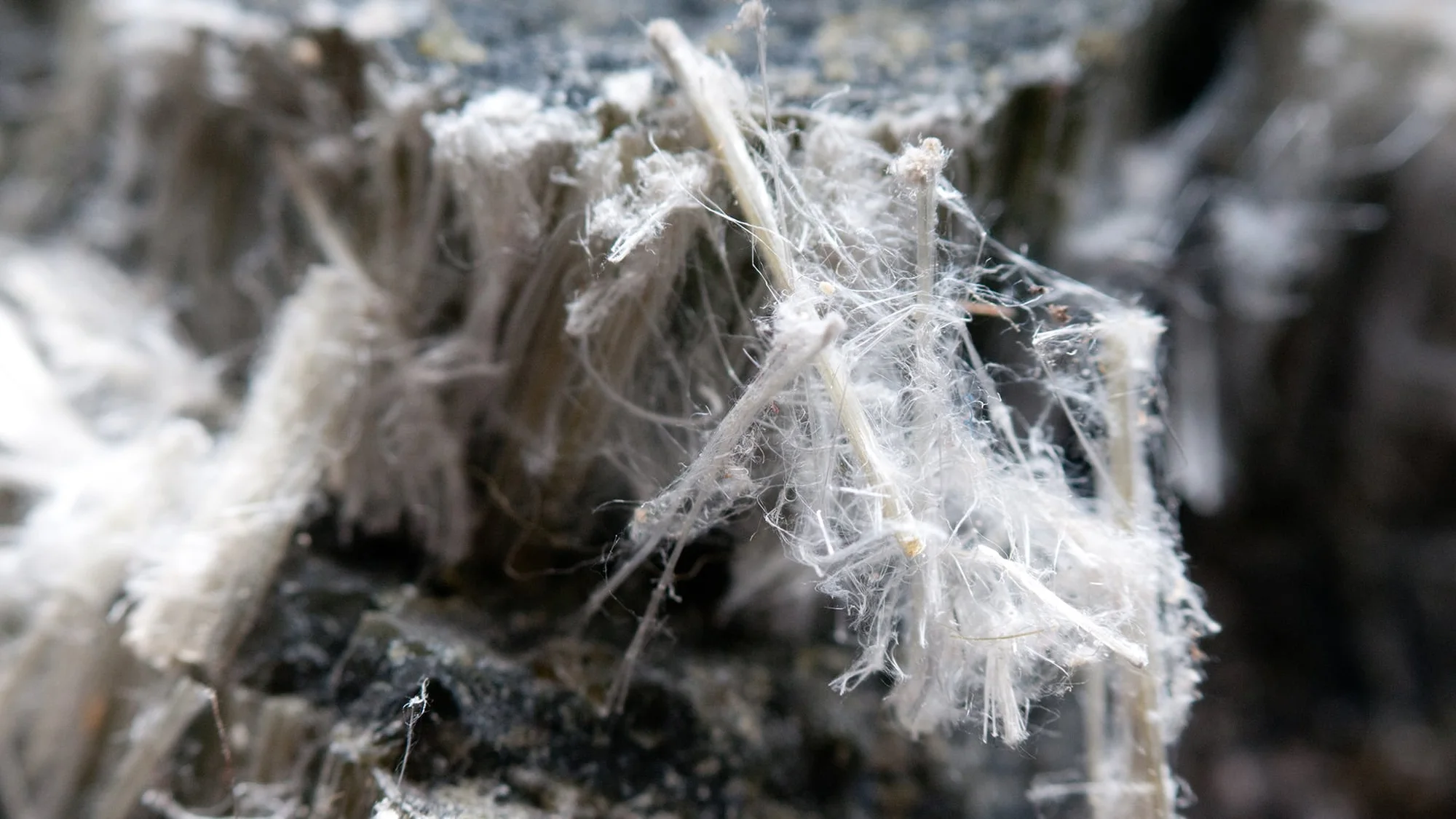
Asbestos cannot be assessed safely with the naked eye. If asbestos is suspected, the material must be examined and the working method determined before the structure is touched.
Authorised work
We are authorised to work with asbestos and ensure safe and legal remediation. With our knowledge and experience, we handle the work correctly in accordance with current regulations. Contact us for professional asbestos remediation. Asbestos – a serious health risk requiring authorised handling Asbestos is a hazardous material that was previously used in construction because of its heat-resistant and insulating properties. Today, we know that asbestos can cause serious health problems if handled incorrectly.
When asbestos fibres are released into the air and inhaled, they can cause life-threatening diseases such as lung cancer and asbestosis. For this reason, there are strict rules for the demolition and remediation of materials containing asbestos. From 2025, all asbestos work will require authorisation, meaning that only companies with the appropriate approval may carry out this work. This ensures that the work is performed safely and in accordance with current legislation.
The work is carried out in accordance with the requirements applicable to authorised asbestos demolition.
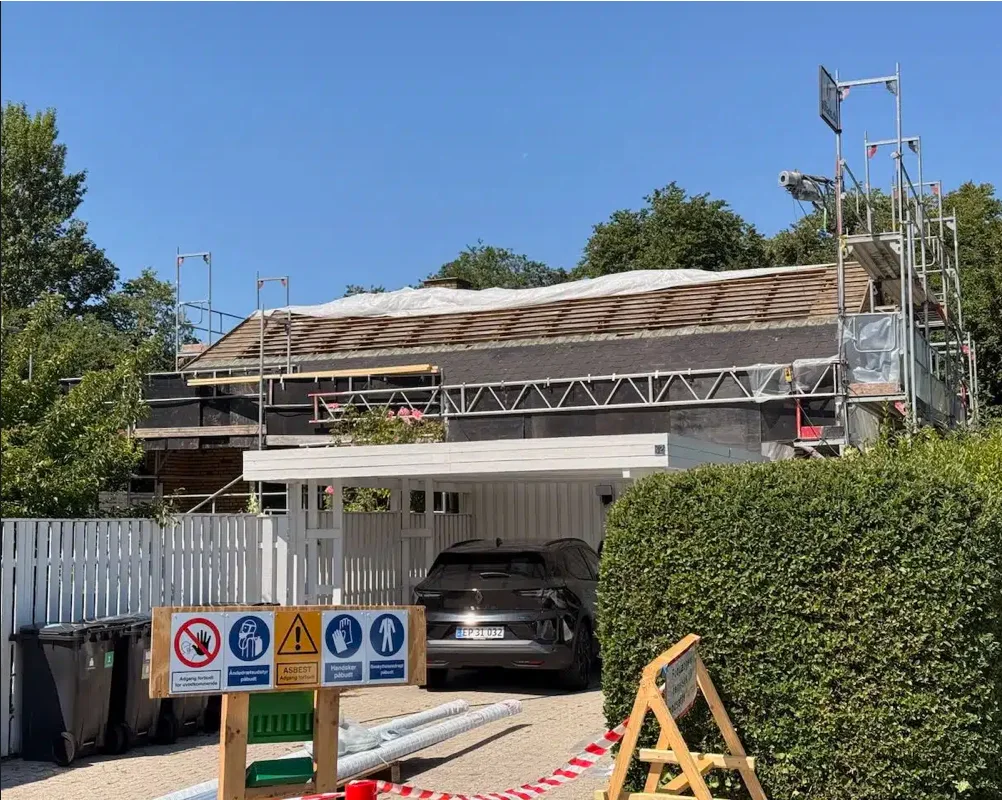
The work area is secured so that dust and fibres do not spread to the rest of the building.
The materials are handled and packaged according to the planned working method.
Disposal and delivery form part of the overall process.
Safe handling
Always check whether your preferred tradesperson is authorised via » The Danish Safety Technology Authority’s Register of Authorisations « Asbestos is a hazardous material that requires special handling. If you are unsure whether your home contains asbestos, or how it should be removed safely, we have compiled the most common questions and answers here. Asbestos consists of microscopic, needle-shaped fibres that can be released into the air if the material is damaged. There are three main types of asbestos:
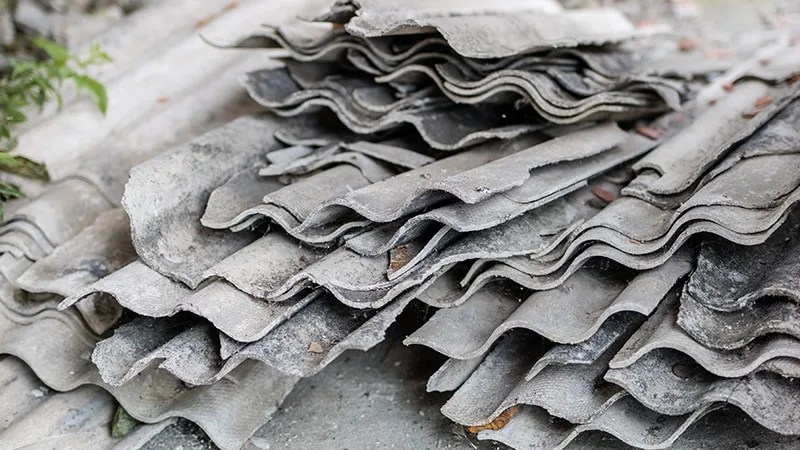
Chrysotile (white asbestos) – the most commonly used type, often found in roofing sheets, pipe insulation and floor coverings. Amosite (brown asbestos) – stronger and more heat-resistant, typically used in insulation and ceiling boards. Crocidolite (blue asbestos) – the most hazardous type, previously used in highly insulating materials such as pipe insulation and cement products. All types of asbestos can cause serious lung diseases, as the fibres are so small that they can penetrate deep into the lungs and remain there for years.
This is why asbestos requires particular care when being handled and removed. Asbestos was used in building materials until 1990, especially in roofing sheets, tile adhesive, ceiling boards and insulation. If your house is older, you should arrange a professional screening and sampling to determine whether asbestos is present. Yes, but the risk is low if the material is intact and undisturbed. The problem arises if the asbestos is damaged, drilled into or demolished, as the fibres are then released and inhaled.
How we work
The material, extent and access conditions are examined.
The enclosure, protective equipment and sequence of work are determined.
The material is removed in a controlled manner and packaged correctly.
The area is cleaned, the waste is disposed of and the process is completed.
Questions and answers
Asbestos is a hazardous material that requires special handling. If you are unsure whether your home contains asbestos, or how it should be removed safely, we have compiled the most common questions and answers here.
Asbestos consists of microscopic, needle-shaped fibres that can be released into the air if the material is damaged. The three main types are chrysotile (white asbestos), amosite (brown asbestos) and crocidolite (blue asbestos). All types can cause serious lung diseases because the fibres can penetrate deep into the lungs and remain there for years.
Asbestos was used in building materials until 1990, especially in roofing sheets, tile adhesive, ceiling boards and insulation. If your house is older, you should arrange a professional screening and sampling to determine whether asbestos is present.
Yes, but the risk is low if the material is intact and undisturbed. The problem arises if the asbestos is damaged, drilled into or demolished, as the fibres are then released and inhaled.
From 1 January 2025, the demolition of asbestos-containing material may generally only be carried out by authorised companies. Private individuals and non-authorised companies may only carry out short-term demolition work of a minor nature. A single project may not be divided up to circumvent the authorisation requirement.
Safe asbestos remediation begins with a thorough preliminary survey. The work area is then enclosed to prevent the spread of fibres. The work is carried out using suitable working methods, tools and personal protective equipment. After removal, the area is thoroughly cleaned and the waste is handled as asbestos waste.
The price depends on the scope of the project, accessibility and the quantity of asbestos-containing material. Contact us for an assessment and a quotation.
Asbestos waste must be transported in suitable, closed packaging that is completely airtight. Acceptance requirements and the option for private delivery vary between local authorities. Therefore, always check the local arrangements before transporting the waste.
The overall process
From 1 January 2025, only authorised companies may carry out asbestos remediation. However, short-term tasks such as removing individual asbestos-containing roofing sheets may, in exceptional cases, be carried out without authorisation. Safe asbestos remediation begins with a thorough preliminary survey to identify asbestos-containing materials. The work area is then enclosed to prevent the spread of asbestos fibres.
The work is carried out using specialist tools and subject to strict safety measures, including the use of supplied-air respirators, protective clothing and a closed waste-handling system. The area is subsequently thoroughly cleaned using specially approved vacuum cleaners, and control measurements are taken to ensure that no asbestos fibres remain in the air or on surfaces. The price depends on the scope of the project, accessibility and the quantity of asbestos-containing material.
Contact us for an assessment and a quotation. Asbestos waste must be securely packaged in airtight plastic x 2 and correctly labelled before being delivered to an approved reception facility. As a private individual, you may be able to deliver small quantities of asbestos waste yourself in some local authorities, but larger projects require authorised handling and notification to the authorities. Several local authorities also require you to notify them of your arrival.
See also
Next step
Tell us what you’re considering and how far you’ve got. We’ll get back to you within 24 hours.